M390, CTS-204P & CPM-20CV
There are few groups of knife steels that have generated as much discussion among enthusiasts as Böhler M390, CTS-204P and CPM 20CV.
They are produced by different steel manufacturers and carry different names, but their chemistry is so closely related that they are generally regarded as equivalent steels within the knife community. All three were developed around the same fundamental concept: an exceptionally wear-resistant stainless steel capable of delivering outstanding edge retention without sacrificing the corrosion resistance expected from a premium modern folding knife.
For the enthusiast, the distinction is therefore less about choosing between three radically different materials and more about understanding the manufacturers, heat treatments and individual knives in which they are used.
The family has become something of a benchmark for premium EDC.
The Origins of M390, 20CV and CTS-204P
The story begins with Böhler M390, developed in Austria using Böhler's powder metallurgy technology.
M390 was designed as a high-performance stainless steel offering exceptional wear resistance alongside excellent corrosion resistance. Its combination of chromium, vanadium, molybdenum and tungsten produces a highly wear-resistant carbide structure while retaining substantial chromium in the steel matrix.
The success of M390 subsequently inspired closely related grades from other manufacturers.
CTS-204P, produced by Carpenter Technology, and CPM 20CV, produced by Crucible Industries, share an extremely similar chemistry with M390.
This is why enthusiasts commonly group them together as the M390 family.
It is worth making the distinction, however, that "equivalent" does not mean absolutely identical in every respect. Manufacturing processes, powder metallurgy technology, heat treatment and the particular blade being produced can all influence the final performance of a knife.
In other words, three knives made from M390, 20CV and 204P may perform extremely similarly, but the steel designation alone does not tell you everything about the finished blade.
What Makes This Steel Family So Good?
The appeal of M390, CTS-204P and CPM 20CV lies in their combination of properties. These steels contain substantial quantities of chromium, vanadium and molybdenum, with the resulting carbide structure providing excellent resistance to abrasive wear. For the user, that translates primarily into excellent edge retention at the same time, the high chromium content provides excellent corrosion resistance.
That combination is what made this family so important.
Traditionally, enthusiasts often had to choose between highly wear-resistant tool steels and highly corrosion-resistant stainless steels. M390 and its close relatives demonstrated that you could have an exceptionally wear-resistant blade that was also genuinely stainless.
M390: The Original Benchmark
Böhler M390 has become one of the best-known premium knife steels in the world.
It is particularly popular in high-end folding knives because it provides an excellent combination of:
- Exceptional corrosion resistance
- Very good edge retention
- Good edge stability
- Excellent wear resistance
- Relatively straightforward maintenance
For EDC users who want a knife that can be carried every day without worrying excessively about moisture, sweat or environmental exposure, M390 remains an outstanding choice.
CPM 20CV
CPM 20CV is Crucible Industries' closely related equivalent.
It has become particularly popular among American knife manufacturers and has appeared in numerous premium production knives. Performance is broadly comparable with M390 and CTS-204P, although individual knives can differ considerably depending upon heat treatment, geometry and edge finishing. CPM 20CV has become something of a modern premium stainless benchmark in its own right.
CTS-204P
CTS-204P is Carpenter Technology's contribution to this family.
Again, its chemistry is extremely close to M390 and 20CV, giving it essentially the same fundamental performance characteristics. It has become particularly interesting to collectors because it has appeared in a number of limited-production knives, Sprint Runs and manufacturer exclusives. For Spyderco enthusiasts, 204P is especially noteworthy because Spyderco has used it in several sought-after releases.
Why Does the Heat Treatment Matter?
This is one of the most important considerations when comparing knives made from M390, 20CV and 204P.
A steel specification tells you what the material can do. It doesn't necessarily tell you what a particular knife will do.
Hardness, heat treatment, blade geometry, edge thickness and finishing all influence the finished knife, two blades made from nominally equivalent steel can therefore exhibit meaningful differences in edge retention, toughness and sharpening behaviour. This is particularly important with high-performance steels.
The best manufacturers don't simply select an impressive steel and put it on the blade. They have to understand how to heat treat and grind it properly.
Edge Retention vs Toughness
The M390 family is particularly strong in wear resistance and corrosion resistance. That does not make these steels the toughest materials available.
Steels such as CPM CruWear, CPM 4V and MagnaCut are generally more attractive when maximum toughness is the priority.
Conversely, steels such as CPM 15V, Maxamet and Rex 121 take wear resistance considerably further.
M390, 20CV and 204P occupy a highly useful middle ground. They offer excellent edge retention while retaining the stainless properties that make them so practical for everyday carry.
That balance is precisely why they have become so popular.
Why They Are So Popular for EDC
For many users, the ideal EDC knife needs to survive a rather unglamorous collection of tasks:
Opening packaging.
Cutting cardboard.
Preparing food.
Cutting cordage.
General household work.
Occasional outdoor use.
It also needs to sit in a pocket for days or weeks without becoming a corrosion project. This is where M390 and its close relatives make so much sense. They offer considerably more cutting longevity than conventional stainless steels while remaining highly resistant to corrosion.
For a user who wants a premium folding knife and doesn't want to compromise on stainless performance, this family remains one of the safest recommendations available.
M390, 20CV and 204P in Spyderco Knives
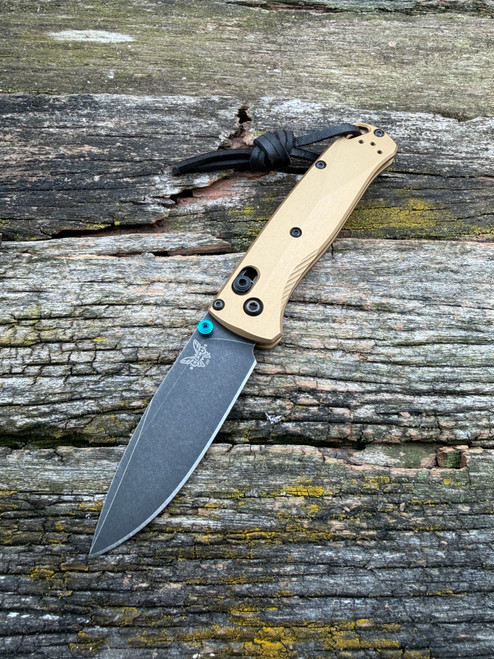
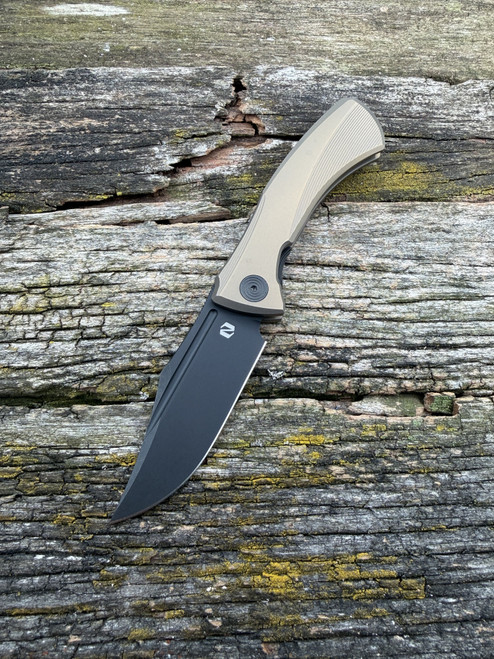
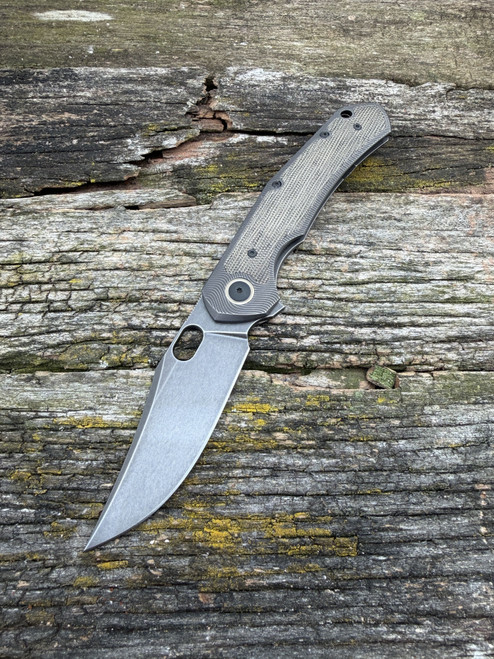
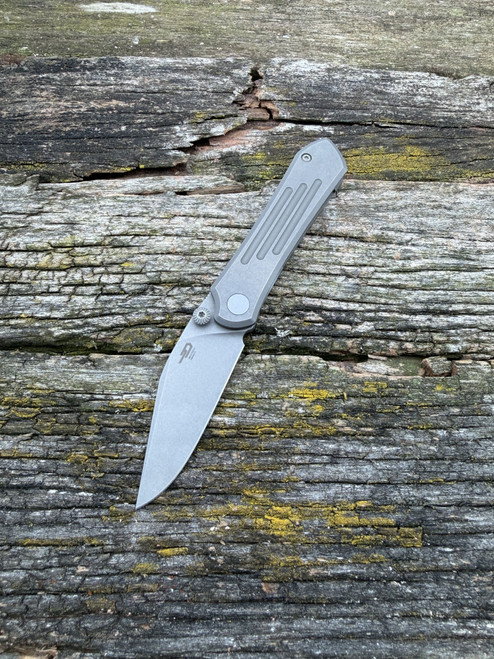
Spyderco has used all three steels across its range, including particularly desirable Sprint Runs and Exclusives. This makes the family especially interesting to collectors. A Spyderco in M390, 20CV or 204P can be more than simply another variation of an established model. Different steels, handle materials, blade finishes and colour combinations can turn familiar platforms into highly collectible configurations.
This is particularly relevant to models such as the Para Military 2, Para 3, Manix 2, Shaman and Native 5, where Spyderco's extensive use of premium steels has created a remarkable number of variants over the years.
For collectors, keeping an eye on Sprint Runs and dealer Exclusives is therefore worthwhile.
Are M390, 20CV and 204P Actually the Same Steel?
This is perhaps the most common question surrounding the three grades.
The short answer is: they are extremely close, but they are not literally the same product.
Their nominal chemical compositions are sufficiently similar that they are generally treated as equivalent steels for practical knife purposes. However, the steel producer, manufacturing process and heat treatment can differ. Consequently, it is more accurate to describe them as three closely related equivalents rather than three identical batches of the same steel.
For the person choosing an EDC knife, the difference between a well-made M390 blade and a well-made 20CV or 204P blade is likely to be far less important than the knife's geometry, heat treatment and intended use.
A Modern Classic
The M390 family has now been established for long enough that it is difficult to describe these steels as experimental or cutting-edge novelties.
They are proven.
They have been used extensively by some of the world's leading knife manufacturers and have become firmly established as premium production steels. Newer alloys such as MagnaCut have raised the bar for balanced stainless performance, while steels such as 15V and Rex 121 have pushed wear resistance to extraordinary levels.
But that doesn't diminish M390.
For a huge number of users, the combination of edge retention, corrosion resistance and practicality remains exactly what they want from a premium folding knife. M390, CTS-204P and CPM 20CV helped establish that combination as one of the defining formulas of modern performance knives and they remain some of the best stainless steels you can put in your pocket.
Frequently Asked Questions
Are M390, 20CV and 204P the same steel?
They are extremely closely related steels with very similar nominal compositions and are generally regarded as equivalent within the knife community. They are produced by different manufacturers, however, so they should not technically be described as identical.
Which is better: M390, 20CV or 204P?
There is no meaningful universal winner. The performance of the finished knife depends heavily on heat treatment, hardness, blade geometry and edge thickness. A well-made example of any of the three can be an outstanding performer.
Is M390 stainless?
Yes. M390 has excellent corrosion resistance and is particularly well suited to everyday carry, humid environments and users who want a high-performance stainless blade.
Is M390 better than S30V?
M390 generally offers greater wear resistance and edge retention than S30V, while both provide good corrosion resistance. S30V remains a well-balanced and proven steel, however.
Is MagnaCut better than M390?
They have different strengths. MagnaCut offers significantly greater toughness and exceptional corrosion resistance, while M390 generally offers greater wear resistance and edge retention.
Is M390 difficult to sharpen?
M390 is more demanding to sharpen than conventional stainless steels because of its high wear resistance. Diamond and CBN abrasives are particularly effective.
What is CPM 20CV?
CPM 20CV is Crucible Industries' powder metallurgy stainless steel and is chemically very closely related to Böhler M390 and Carpenter CTS-204P.
What is CTS-204P?
CTS-204P is Carpenter Technology's premium powder metallurgy stainless steel and is one of the three steels commonly grouped into the M390 family.
What Spyderco knives are available in M390, 20CV and 204P?
Spyderco has produced numerous models using steels from this family, including various Sprint Runs and Exclusives. The exact availability changes over time, making the Sprint Run and Exclusive categories particularly useful for collectors.
Is M390 good for everyday carry?
Yes. Its excellent combination of corrosion resistance and edge retention makes it one of the most popular premium steels for EDC knives.