S30V
CPM S30V: The Steel That Changed the Modern Knife
There are newer knife steels, there are more exotic knife steels and there are steels that outperform S30V in individual areas. But very few steels have had the influence of CPM S30V.
When S30V was introduced, it represented a fundamental change in what could reasonably be expected from a production knife. Developed specifically for the knife industry rather than adapted from an industrial tool steel, S30V helped establish the idea that a folding knife could be a genuinely high-performance cutting instrument built around purpose-designed metallurgy.
For more than two decades, S30V has remained one of the most recognisable premium knife steels in the world.
The Origins of S30V
CPM S30V was developed by Crucible Industries in collaboration with renowned knifemaker Chris Reeve and was introduced in the early 2000s.
This was significant because S30V was conceived specifically as a knife steel.
Before S30V, many of the steels used in premium knives had originated in other industries and had subsequently been adopted by knifemakers. S30V represented a more deliberate approach: design the chemistry around the requirements of a modern cutting tool.
The objective was to create a stainless steel offering an excellent combination of:
- Edge retention
- Toughness
- Corrosion resistance
- Sharpenability
- Edge stability
Crucible's CPM powder metallurgy process allowed the alloy to achieve a fine, uniform carbide structure, helping S30V deliver a level of performance that was genuinely impressive for its time.
The Steel That Defined a Generation
S30V quickly became synonymous with premium production knives.
For enthusiasts who began collecting knives during the 2000s, S30V was often the first serious upgrade from conventional stainless steels such as AUS-8, 8Cr13MoV or VG-10.
It offered noticeably better edge retention while retaining the corrosion resistance and general usability that made stainless steel attractive in the first place.
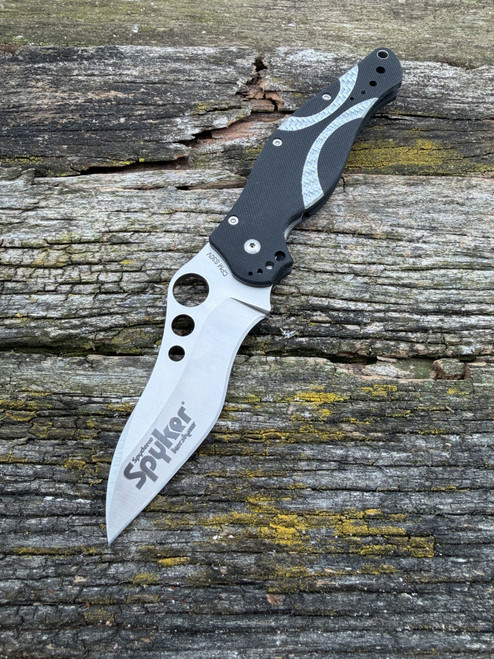
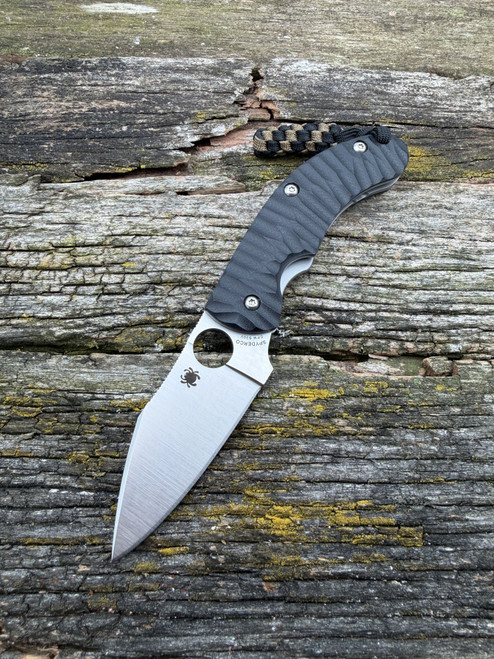
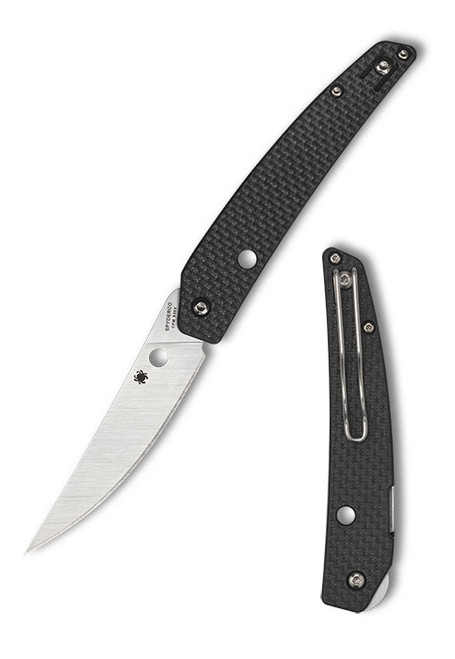
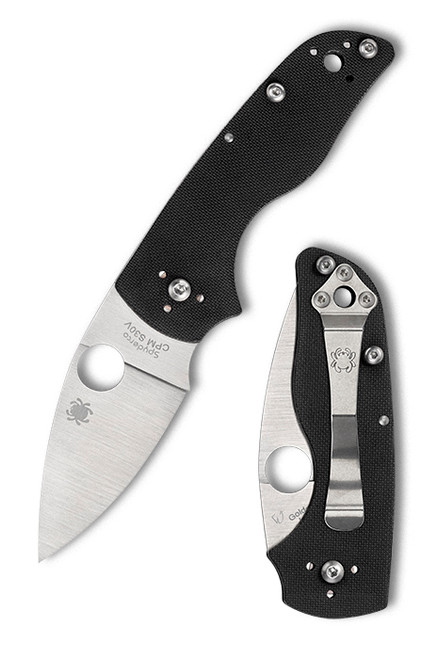
Spyderco was among the manufacturers that helped establish S30V as a serious performance steel, incorporating it into some of the company's most important models.
The result was a generation of knives that remain highly regarded today.
What Makes S30V Work?
S30V contains approximately 14% chromium and around 4% vanadium, alongside carbon, molybdenum and other alloying elements.
The vanadium is particularly important.
During heat treatment, it forms extremely hard vanadium carbides within the steel's matrix. These carbides provide significant resistance to abrasive wear, helping the blade retain its cutting edge for considerably longer than many traditional stainless steels.
At the same time, S30V retains enough chromium in solution to provide strong corrosion resistance.
The result is a well-balanced stainless steel that works extremely well for everyday knives.
S30V's Real Strength: Balance
S30V is not the toughest knife steel ever produced.
It doesn't have the edge retention of CPM 15V, Maxamet or Rex 121.
It isn't as corrosion resistant as MagnaCut.
And it isn't as tough as steels such as CPM CruWear.
That isn't really the point.
S30V was designed to provide a balanced package of properties, and that remains one of its greatest strengths.
For everyday carry, it offers a very sensible combination of:
- Good edge retention
- Good toughness
- Excellent corrosion resistance
- Relatively straightforward maintenance
- Proven heat-treatment practices
That versatility explains why S30V has remained relevant even as the knife steel market has become dramatically more sophisticated.
Spyderco and S30V
Spyderco has played an important role in S30V's history.
The steel has appeared across numerous Spyderco models and has become particularly associated with some of the company's most iconic designs.
For enthusiasts, an S30V Spyderco represents an important chapter in the development of the modern production knife.
It is also worth remembering that a steel's performance cannot be judged entirely from its chemistry. Heat treatment, blade geometry, edge thickness and finishing all have enormous influence on how a knife actually performs.
Spyderco's experience with S30V is part of the reason the steel has developed such a strong reputation.
Is S30V Still a Good Knife Steel?
Absolutely.
Anybody who turns their nose up at S30V does not know what they're talking about. While the arrival of MagnaCut and increasingly exotic steels has somewhat pushed S30V further down the performance hierarchy, S30V is still an excellent cutlery steel that holds it's own against any of the new contenders.
S30V remains an excellent choice for a general-purpose folding knife.
It provides considerably more edge retention than traditional stainless steels while remaining highly corrosion resistant and practical to maintain.
For someone who wants a premium stainless EDC knife without needing the extreme drawbacks or maintenance requirements of exotic tool steels, S30V remains an extremely strong choice.
S30V and the Evolution of Knife Steel
Perhaps the best way to understand S30V is to look at what came after it.
Steels such as S35VN, S45VN and MagnaCut can be seen, in part, as subsequent attempts to refine the balance that S30V helped establish.
Meanwhile, steels such as S90V pushed the wear-resistance side of the equation much further.
S30V therefore occupies an important position in modern knife history.
It wasn't simply another steel.
It helped demonstrate that purpose-designed powder metallurgy stainless steels could deliver genuinely exceptional performance in production knives.
More than twenty years later, that achievement still matters.
Frequently Asked Questions
What is CPM S30V steel?
CPM S30V is a powder metallurgy stainless steel developed by Crucible Industries specifically for knife applications. It offers a strong balance of edge retention, corrosion resistance and toughness.
Is S30V stainless?
Yes. S30V is a stainless steel containing approximately 14% chromium and offers very good corrosion resistance for everyday knife use.
Is S30V still a good knife steel?
Yes. Although newer steels offer improvements in particular areas, S30V remains a proven and capable premium EDC steel with excellent all-round performance.
Is S30V better than S35VN?
They are closely related premium stainless steels with different performance characteristics. S35VN was developed partly to improve the balance of toughness and ease of sharpening compared with S30V, while S30V generally retains a strong reputation for wear resistance.
Is S30V better than MagnaCut?
Not generally. MagnaCut offers a superior overall balance of toughness, corrosion resistance and comparible edge retention. However, S30V remains an excellent and proven stainless steel.
Is S30V difficult to sharpen?
S30V is more demanding than conventional stainless steels but is not considered an exceptionally difficult steel to maintain. Quality diamond or modern abrasive systems make sharpening straightforward.
Does S30V rust?
S30V has good corrosion resistance and rarely succumbs to rust in normal working environments but like any steel it can corrode under sufficiently aggressive conditions. Regular cleaning and drying are sensible, particularly in marine or high-humidity environments.
What Spyderco knives use S30V?
Spyderco had some input in developing S30V and has produced numerous models in it over the years, including versions of some of its most important and popular folding knives.
Who developed S30V?
S30V was developed by Crucible Industries in collaboration with knifemaker Chris Reeve and was specifically designed for use in knives.